Vertical Gardening with Trellises
Learn how to use trellises on a balcony to save space, support climbing crops, and improve light, airflow, and harvests.
Vertical Gardening with Trellises
A balcony can feel small fast, especially once you add a few pots, a watering can, and a chair or two. That is exactly why vertical gardening is so useful. When you grow upward instead of outward, you reclaim floor space, improve airflow around your plants, and create a planting setup that is both productive and attractive.
Trellises are one of the simplest ways to make that happen. A well-placed support can turn a plain container into a living screen, a harvest wall, or a compact mini-garden that produces far more than its footprint suggests.
Vertical growing is not just about saving space. It also helps keep fruits and leaves cleaner, makes harvesting easier, and can reduce some disease problems by improving air circulation. :::
Why trellises work so well on balconies
Balcony gardens have a few built-in challenges: limited floor area, wind exposure, and the need to keep everything stable and lightweight. Trellises solve several of those issues at once.
First, they use the empty air above your containers. Instead of spreading plants across the floor, you can guide them upward along a frame, railing support, or wall-mounted structure. That means more room for other pots below, such as herbs, salad greens, or pollinator flowers.
Second, vertical growth improves airflow. Leaves dry faster after rain or watering, which can lower the risk of mildew and fungal disease. This matters a lot on balconies where plants may be crowded close together and the air can feel still.
Third, climbing crops often perform better when they are lifted off the soil surface. Cucumbers are straighter, beans are easier to pick, and tomatoes stay tidier when they are supported.
Finally, trellises can make a balcony more beautiful. A few climbing plants can soften railings, add privacy, and create a lush backdrop without needing huge planters.
Best benefits at a glance
| Benefit | Why it matters on a balcony | Example result |
|---|---|---|
| Saves floor space | Keeps the planting area open for more pots | More room for herbs or seating |
| Improves airflow | Helps foliage dry faster | Lower mildew risk |
| Simplifies harvesting | Fruits and pods are easier to see and reach | Faster picking, less missed produce |
| Adds privacy | Dense vines screen railings | A greener, more enclosed feel |
| Boosts aesthetics | Vertical lines create a finished look | Balcony looks intentional and tidy |
If your balcony only has room for a few larger containers, vertical growing lets those containers work harder. One sturdy trellised pot can replace several sprawling pots. :::
Best crops for trellising
Not every plant is a good candidate for climbing. The best trellis crops are those that naturally want to reach upward or can be easily trained with ties and clips.
Reliable choices
- Peas: Cool-weather climbers that cling with tendrils and do well in shallow-to-medium containers.
- Beans: Pole beans are especially productive when given a tall support.
- Cucumbers: Many compact or vining varieties thrive when trained upward and are easier to harvest off a trellis.
- Small tomatoes: Indeterminate and semi-determinate types can be supported with a trellis, though they still need regular tying.
- Flowering climbers: Sweet peas, morning glories, and nasturtiums can add color and pollinator interest.
You can also try some less obvious options if space and light are good. Compact melons, climbing nasturtiums, and certain runner beans can work, but they may need more root space and consistent watering than a tiny balcony can comfortably provide.
Choosing the right crop for your conditions
The best crop depends on three things:
- Sunlight – Fruit crops like tomatoes and cucumbers usually want more sun than peas or ornamentals.
- Container size – Bigger vines need deeper, wider pots with more stable moisture.
- Wind exposure – Large leafy vines can act like sails, so exposed balconies need especially secure supports.
A simple rule: the more vigorous the vine, the sturdier the container and support must be.
Do not assume any vine will behave politely on a small balcony. Some plants can quickly outgrow a modest support and become hard to manage if you do not prune and train them early. :::
Choosing a support system
There are several trellis styles that work well on balconies, and the best one depends on your layout, plant weight, and whether you can attach anything to walls or railings.
Common options
| Support type | Best for | Strengths | Things to consider |
|---|---|---|---|
| Rail-mounted frame | Beans, peas, lightweight vines | Saves space, easy to position | Must be secure and non-damaging to railing |
| Wall trellis | Climbers in deep pots near a wall | Clean look, good height | May require permission or careful non-permanent mounting |
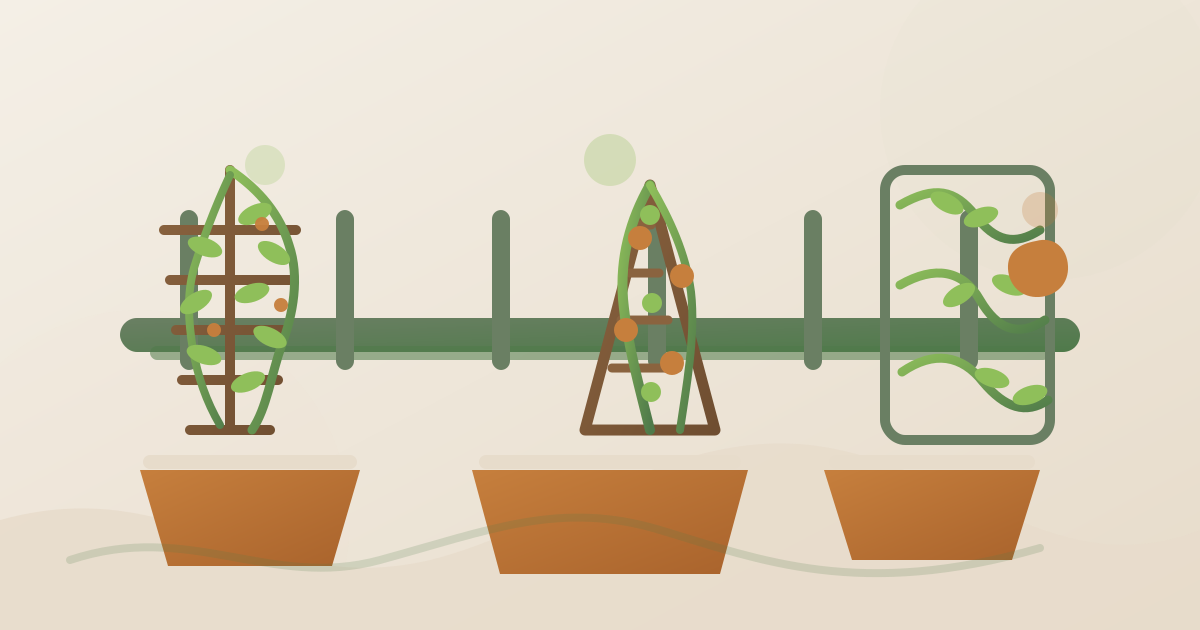
| Obelisk or tower | Tomatoes, flowering climbers, mixed containers | Stable, decorative, reusable | Takes up some floor space |
| A-frame support | Cucumbers, small gourds, beans | Strong and versatile | Needs room for base width |
| Cage-style support | Compact tomatoes or bushy climbers | Helps contain shape | Less ideal for plants that need tall, open growth |
The most important factor is not style but stability. A support that looks elegant but tips in the wind is not a good balcony solution.
Secure tie methods
Plants need to be guided, but not squeezed. Use soft ties, plant clips, twine, or strips of flexible garden tape. Avoid thin wire or anything that can cut into stems.
A good tie should hold the stem close enough to support it, but leave room for stem thickening. Check ties every week or two as the plant grows.
Installation and safety tips
Balconies add one major concern that ground-level gardens do not have: safety. Any support must handle wind, watering, and plant weight without damaging the balcony or putting pressure on weak structures.
Keep these safety points in mind
- Check weight limits: Containers full of wet soil are much heavier than they look.
- Account for wind: Tall vines catch gusts and can pull supports sideways.
- Avoid unstable edges: Keep heavy containers away from spots where they could be bumped or toppled.
- Protect surfaces: Use saucers, feet, mats, or risers so water does not stain or damage decking.
- Anchor wisely: If a support leans, flexes, or rattles, reinforce it before planting.
If your balcony has a railing, make sure any mounted support does not scratch the finish or create a failure point. If you rent, choose removable solutions that do not require drilling.
A tall trellis is only as good as its base. On a balcony, it is usually better to choose a slightly smaller but sturdier support than a dramatic one that is hard to anchor. :::
A practical setup approach
For most balcony gardeners, a good starter system looks like this:
- One deep container
- One compact trellis or frame
- One climber per container, or two at most if the pot is large
- Soft ties for weekly training
- A watering plan that keeps the root zone evenly moist
That setup is simple, scalable, and easy to adjust as you learn what your balcony can support.
Training plants upward
Trellising works best when you start early. A young vine is easier to guide than a mature one that has already started sprawling sideways.
How to train without damaging the plant
-
Begin while the stems are flexible. Early growth bends more easily and is less likely to snap.
-
Tie loosely. Leave enough space for stem thickening and movement in the wind.
-
Guide new growth regularly. Check plants every few days during fast growth periods so stems do not wander off course.
-
Prune when needed. Remove weak, damaged, or overly crowded stems so the plant can focus energy on strong growth and fruiting.
-
Space plants properly. Overcrowded vines compete for light and make it harder to train each stem cleanly.
Some climbers, such as peas, naturally grab the support with tendrils. Others, like tomatoes, need more hands-on tying. Cucumbers often benefit from a little help at first until their vines find the trellis on their own.
A simple maintenance routine
- Check support stability after storms or windy days
- Tie up stray stems once or twice a week
- Remove yellowing lower leaves to improve airflow
- Harvest frequently so fruits do not become overlarge and heavy
- Redirect stems before they tangle with neighboring pots
This kind of routine only takes a few minutes but makes a big difference in plant health and appearance.
Common mistakes to avoid
Even a basic trellis setup can go wrong if the system is not matched to the plant.
1. Using flimsy supports
A thin decorative stake may be fine for a single flower, but it will not hold up a cucumber vine in wind. For climbing crops, choose supports made for real weight.
2. Overcrowding the container
It is tempting to plant several climbers in one pot, but that often leads to competition, tangled stems, and weak growth. One strong plant usually performs better than two cramped ones.
3. Letting the vine get too large too fast
By the time a plant is sprawling across the balcony floor, it is much harder to train. Start early and stay consistent.
4. Choosing the wrong crop for the space
A vigorous melon or heavy fruiting vine may be too much for a small balcony unless you have very sturdy support and enough root room.
5. Forgetting to account for watering
Trellised plants still need enough water, sometimes more than sprawling ones because they grow quickly and receive more sun and wind. Dry roots can lead to poor fruiting and weak stems.
A plant that is allowed to trail everywhere may look relaxed at first, but tangled vines often hide pests, shade their own leaves, and become much harder to harvest later. :::
A simple trellis plan for a productive balcony
If you want to start small, pick one crop and one support. For example:
- A large pot near the railing
- A sturdy tomato cage or narrow trellis
- One compact cucumber or a climbing bean variety
- A few ties and a weekly check-in schedule
Once that is working, you can expand into a second vertical layer with herbs or salad greens below, or a flowering climber for color and pollinators.
The beauty of vertical gardening is that it scales. You do not need a huge investment or a complicated structure to make it work. You just need the right match between plant, pot, and support.
Conclusion
Trellises are one of the best tools for balcony gardeners because they turn limited space into usable growing room. They improve airflow, make harvesting easier, and help climbing crops stay healthier and more manageable.
Start with a sturdy support, choose plants that suit your light and container size, and train growth early. Avoid flimsy materials and overcrowding, and your balcony can become both more productive and more beautiful.
With one well-planned trellis, even a small balcony can grow upward instead of outward — and that often makes all the difference.